Compared 8 document apps for my team: The one that cut meeting time in half
Remember that endless back-and-forth over files—emails piling up, versions getting mixed, and no one knowing who changed what? I lived that chaos until we found a better way. It wasn’t magic, just the right app quietly transforming how we work. No more confusion, no more stress before meetings. I’ll share how one small switch made our days smoother, gave us time back, and actually made collaboration feel human again. This isn’t about tech for tech’s sake—it’s about working with less friction and more clarity. If you’ve ever stared at an inbox full of subject lines like ‘Updated_Final_v3’ or ‘PLEASE USE THIS VERSION,’ you already know the frustration. We were drowning in good intentions and lost time. But what changed wasn’t a miracle. It was a tool that finally worked like real life—simple, shared, and always in sync.
The Paper Chase That Wasted Our Mornings
Every weekday used to start the same way: a scramble for the right file. I’d open my email to find three versions of the same budget report, each with a slightly different name and no clear explanation of what had changed. One came from Sarah at 9:15 a.m., another from Mark at 9:22, and a third—labeled ‘Final_FINAL_no_really’—from our project lead at 9:28. By the time we logged into our team meeting, half of us were looking at one version, the other half at another. No one was wrong, but everyone was out of sync.
The real cost wasn’t just wasted minutes—it was the emotional weight of never feeling quite on top of things. I remember walking into a client presentation with printed pages in hand, only to realize two team members had made last-minute edits I hadn’t seen. I stood there, flipping through mismatched sheets, smiling while my stomach dropped. That moment wasn’t just embarrassing—it eroded confidence. Not in our work, but in our process. We were capable, organized people, yet we kept tripping over something as basic as document sharing.
What made it worse was the constant low-grade anxiety. Did my teammate see my note about the pricing error? Did they accept my edit, or was it lost in a draft no one opened? We weren’t just managing files—we were managing fear. Fear of being the one who messed up, fear of letting someone down, fear of looking unprepared. That stress followed us beyond the office, into our evenings and weekends. I’d wake up on Sunday mornings wondering if someone had sent a revised proposal I hadn’t reviewed. The work never really stopped—it just followed us, scattered across inboxes and hard drives.
Looking back, I realize we weren’t inefficient because we were lazy or disorganized. We were inefficient because our tools didn’t match how we actually worked. We needed something that moved as fast as our conversations did, that kept up with our ideas, and that didn’t require constant babysitting. But we didn’t know it yet. All we knew was that every Monday felt like starting over.
Why We Tried So Many Apps (And Kept Going Back to Email)
We weren’t blind to the problem. We knew email wasn’t built for collaboration, not really. So we started testing alternatives. I remember our first team meeting about it—everyone brought a list of apps they’d heard about. We tried one that promised ‘seamless real-time editing’ but crashed every time more than three people opened the same document. Another looked sleek but buried the save button behind three menus. One required a desktop app just to view comments, which meant our freelance designer couldn’t participate without installing software she didn’t want.
The real challenge wasn’t the technology—it was adoption. Our team includes people with different comfort levels around tech. Linda, who runs our client outreach, isn’t what you’d call ‘digital-native.’ She’s brilliant at her job, but she doesn’t want to spend time learning a new interface every few months. When one app asked her to ‘sync offline changes upon reconnection,’ she looked at me and said, ‘What does that even mean?’ We couldn’t ask her to figure it out—not when her time was better spent building relationships with our community partners.
We kept falling back to email because it was predictable. Even with all its flaws, we knew how it worked. Attach a file, hit send, wait for a reply. No learning curve. No permissions to set. And most importantly, no fear of doing it wrong. That safety net came at a cost—hours lost, confusion, frustration—but it felt less risky than trying something new and failing in front of clients.
One tool we tested had amazing features: version history, comment threads, task assignments. But getting everyone on board took two training sessions, a cheat sheet, and constant reminders. By week three, only two of us were using it consistently. The others had defaulted back to emailing PDFs. We realized then that the best tool isn’t the one with the most features—it’s the one everyone will actually use. We needed something so simple that it felt invisible. Something that didn’t require a manual, a meeting, or a mindset shift. We just wanted to write, share, and move on.
The Day One Small Change Unlocked Our Workflow
The shift started with a quiet suggestion from Jamie, our operations lead. We were wrapping up a particularly messy meeting, full of ‘Wait, did you see my update?’ and ‘I thought we agreed on this yesterday.’ As we packed up, Jamie said, ‘What if we just… stopped emailing documents altogether? What if we had one place where we wrote, edited, and talked about the work—all in the same spot?’
It sounded almost too simple. But we were tired of complex solutions that didn’t stick. So we picked one project—a community grant proposal—to test the idea. No rollout plan, no big announcement. Just a shared link sent to the team with a note: ‘Let’s try working here instead of over email.’
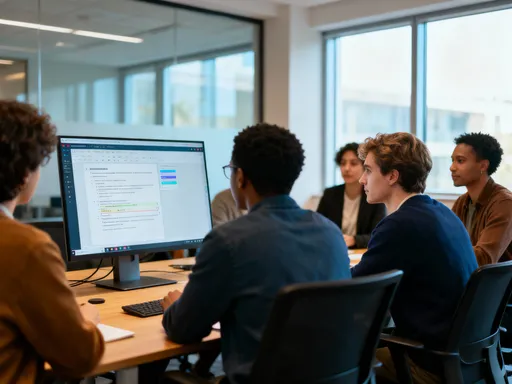
The difference was immediate. During our next meeting, I watched Sarah add a funding statistic in real time while Mark commented on the wording. I could see the changes happening as we spoke. No one had to say, ‘I’ll send you the updated version after this call.’ It was already there. When we disagreed on a sentence, we didn’t argue—we clicked ‘comment,’ typed our thoughts, and tagged the person. The conversation stayed attached to the text, not buried in an inbox.
By the end of the week, something remarkable happened: our weekly check-in ended 25 minutes early. Not because we skipped anything, but because we didn’t need to rehash decisions or clarify edits. Everyone had seen the updates as they happened. The agenda wasn’t a list of unresolved questions—it was a progress tracker. I remember walking out of that meeting feeling lighter, like we’d finally caught up with ourselves. For the first time in months, I didn’t leave with a mental to-do list of ‘follow up on version control.’ That one link had done the work for us.
How Real-Time Collaboration Quietly Reduced Stress
I’ll admit, I was nervous at first about editing live. I imagined overwriting someone’s work, or worse—being watched as I typed. But the opposite happened. Seeing changes in real time didn’t feel invasive; it felt reassuring. When I opened the document and saw a teammate adding a new section, I didn’t feel interrupted. I felt connected. It was like working side by side, even when we were miles apart.
One moment stands out. We were on a call with a partner organization, discussing program goals. As they spoke, I saw our program director, Elena, quietly adding their feedback directly into the draft. No note-taking, no ‘I’ll update that later.’ Just instant integration. When the call ended, the document already reflected the conversation. No one had to transcribe anything. That moment changed how I saw the tool—not as software, but as a living record of our work.
The biggest shift was in our communication. We stopped scheduling ‘alignment meetings’ just to make sure everyone was on the same page. Instead, we trusted the document. If someone made a change, we could see it, respond to it, and move on. Comments replaced long email chains. Decisions were documented, not debated twice. Our meetings became shorter, more focused, and more productive. We weren’t spending time catching up—we were moving forward.
And the emotional toll? It lessened. I stopped dreading the ‘reply-all’ thread. I no longer felt the need to CC everyone ‘just in case.’ There was a shared sense of calm, like we’d finally built a system that worked for us, not against us. The tool didn’t eliminate hard work, but it removed the noise around it. We could focus on the ideas, not the mechanics of sharing them.
Making It Work for Everyone—Even the Tech-Wary
The true test came when Linda started using it without being asked. One morning, I noticed she’d added a comment to a draft outreach letter. I asked how she figured it out. She shrugged and said, ‘You sent a link. I clicked it. I typed. It saved itself. Was I supposed to do something else?’
That moment was everything. We hadn’t trained her. We hadn’t made a video tutorial. She just used it—naturally, confidently—because it asked so little of her. The learning curve wasn’t flat; it was invisible. She didn’t need to understand cloud storage or version control. She just needed to write, and the tool handled the rest.
We did set a few simple ground rules, not as policies but as shared habits. First: one source of truth. No more ‘I’ll send you the latest version’—just the link. Second: comment, don’t rewrite. If you disagree with wording, say why in a comment instead of deleting and retyping. Third: always use the shared link, even for quick edits. These weren’t rules enforced by IT—they were agreements we made as a team, because they made our lives easier.
What surprised me was how quickly these habits stuck. We didn’t need reminders or audits. People followed them because they could feel the difference. Meetings were shorter. Misunderstandings were fewer. Work felt lighter. The tool didn’t change our team culture—it reflected it. We valued clarity, respect, and trust. Now our workflow did too.
Beyond the Office: How This Changed Our Work-Life Balance
The ripple effects reached far beyond our workday. I used to get emails at 8 p.m. with subject lines like ‘Quick update—please review.’ I’d feel obligated to open them, even during family time. If I didn’t, I’d worry the next morning that I’d missed something important. That cycle of guilt and anxiety wore me down.
Now, those emails are rare. Because the document is always up to date, there’s no need to send a file ‘for your review.’ You just know it’s there, and any changes are visible. I can wait until morning to check it—without fear. That small shift gave me back my evenings. I stopped bringing my laptop to the couch during dinner. I stopped checking email during my daughter’s soccer practice. I could be present, because I trusted the system to hold the work until I returned.
And that trust changed how I showed up at work, too. I wasn’t starting each day exhausted from mental multitasking. I could focus because I wasn’t carrying the weight of unresolved questions. My creativity improved. My patience grew. I had more energy for the things that mattered—mentoring junior team members, brainstorming new initiatives, even just listening more deeply in meetings.
This wasn’t about working less. It was about working with more peace. The time we saved didn’t vanish—it turned into space. Space to think. Space to breathe. Space to be human. And that, more than any efficiency metric, is what transformed our team.
The Bigger Picture: Small Tools, Lasting Peace
I won’t pretend this was a digital revolution. We didn’t overhaul our entire tech stack. We didn’t hire a consultant or run a pilot program. We just found one tool that fit—really fit—into the way we live and work. And from that small change, big things grew.
It taught us that efficiency isn’t about doing more in less time. It’s about removing the friction that steals our focus, our calm, and our connection. It’s about creating systems that honor our time and our energy. That one document app didn’t just cut meeting time in half. It restored trust in our process. It gave us confidence in each other’s work. It protected our personal lives from the overflow of professional chaos.
Most importantly, it reminded us that technology should serve us—not the other way around. It shouldn’t demand our attention; it should return it. It shouldn’t complicate our days; it should simplify them. The best tools aren’t the flashiest. They’re the ones that disappear into the background, doing their job so quietly that you forget they’re there—until you imagine going back to life without them.
If you’re still managing documents through email chains and version names like ‘Final_v2_REALLY_final,’ I get it. It’s familiar. It feels safe. But I also know the cost—the lost time, the quiet stress, the missed moments at home. And I know there’s another way. It starts with a single step: choosing one place for your work, and inviting your team to meet you there. You might be surprised how much lighter everything feels when you stop chasing files and start sharing them.