Tired of typing in the cold? How voice-to-text saved my winter workflow
Winter mornings used to wreck my productivity—fingers stiff, coffee in hand, struggling to type. I’d delay replies, miss ideas, and feel sluggish. Then I rediscovered voice-to-text. No more freezing hands or slow typing. Now I dictate emails, notes, and to-do lists while warming up by the window. It’s not magic—just smart tech meeting real life. And it’s changed how I work when the weather won’t cooperate. If you’ve ever sat there, wrapped in a blanket, wishing you could get things done without losing the warmth, you’re not alone. This is how one small shift made a big difference.
The Winter Productivity Trap
Let’s talk about something most of us don’t admit: winter slows us down in ways we rarely plan for. It’s not just the darker mornings or the heavier coats. It’s the way your fingers stiffen the moment they leave your pockets. It’s the mental fog that comes with being just a little too cold to think clearly. I used to sit at my desk, hands curled around a mug, waiting for the feeling to come back into my fingertips before I could even open my laptop. By the time I started typing, an hour had slipped away. And it wasn’t just work—ideas for dinner, reminders for the kids’ school forms, thoughts I wanted to jot down—all lost to the cold.
For women juggling work, family, and personal goals, those lost moments matter. We don’t have the luxury of waiting until we’re perfectly warm or fully awake. Life doesn’t pause. The school forms still need signing. The grocery list still needs updating. The work deadline still looms. What I realized wasn’t that I was falling behind—it was that I was fighting against my own body. The cold wasn’t just outside. It had seeped into my rhythm, making everything feel heavier, slower, harder. And I wasn’t alone. So many of us feel this seasonal drag, especially in the early months of the year when motivation is already low and energy is thin.
But here’s the truth: it’s not about pushing through. It’s about adapting. And that’s where technology, used the right way, can become more than a tool—it can become a partner in your daily life. I didn’t need to work harder. I needed to work smarter. And the answer wasn’t in a new planner or a different coffee blend. It was in something I already had, something I’d overlooked for years: my voice.
Discovering a Simpler Way to Work
It started with a simple message to my sister. I was standing by the window, watching the frost melt, and I wanted to send her a quick note about our mom’s birthday gift. My fingers were still cold, and typing felt like a chore. So on a whim, I held down the microphone on my phone and just spoke. “Hey, let’s get Mom that gardening set she mentioned. She’d love it.” I sent it without editing. And it worked. No typos. No struggle. Just done.
That tiny moment changed everything. It wasn’t revolutionary. It wasn’t flashy. But it was fast. And in that moment, I felt a spark of control return. I wasn’t at the mercy of my stiff fingers anymore. My voice was warm, clear, and ready. So I tried it again. And again. I dictated a grocery list while buttering toast. I recorded a reminder to call the dentist while pulling on my socks. Each time, it took seconds. Each time, I reclaimed a little more of my morning.
What I discovered wasn’t that voice-to-text was perfect—it wasn’t. But it was good enough. And more importantly, it was kinder to my body and my energy. I wasn’t forcing myself to perform like it was July in January. I was meeting myself where I was. That shift in mindset—from resistance to acceptance—was just as important as the tech itself. Voice-to-text didn’t fix winter. But it gave me a way to move through it without losing myself.
How Voice-to-Text Fits Into Real Life
The real power of voice-to-text isn’t in long dictations or formal documents. It’s in the small, everyday moments that add up. Think about your morning: you’re making coffee, helping kids with backpacks, checking the weather. Your hands are full. Your mind is busy. But your voice? It’s free. And that’s where this tool shines.
I started using it during the in-between times—the five minutes while the kettle boils, the few seconds while waiting for the microwave, the quiet stretch while the kids eat breakfast. Instead of letting ideas float away, I’d say them out loud. “Order more laundry detergent.” “Ask Sarah about the PTA meeting.” “Follow up with the client about the proposal.” These weren’t grand statements. They were tiny anchors, keeping me connected to my day.
And it wasn’t just at home. I used it during walks, while folding laundry, even in the car (hands-free, of course). One morning, I dictated an entire email while brushing my teeth. It wasn’t perfect, but it was a draft—something I could edit later, when I was warm and settled. The beauty of it was that it didn’t require extra time. It fit into the time I already had. I wasn’t adding a new habit. I was simply using the tools I already owned in a new way.
For busy women, this is everything. We don’t need more hours. We need better use of the hours we have. Voice-to-text became my silent assistant, always ready, never complaining. It didn’t care if I was in pajamas or if my hair was messy. It just listened. And in return, it gave me back focus, clarity, and a little more peace.
Breaking the “Tech Must Be Perfect” Myth
I’ll be honest—I almost gave up in the beginning. The first time I said, “Buy oats for breakfast,” and my phone wrote, “Buy boats for breakfast,” I laughed, but then I felt frustrated. Was this really worth it? I expected the tech to be flawless. I thought if it couldn’t understand me perfectly, it was useless. But that was the wrong mindset.
Here’s what changed: I stopped seeing voice-to-text as a replacement for typing and started seeing it as a first draft tool. If it got 80% right, that was still faster than starting from blank page. I learned to speak a little more clearly, to pause between sentences, and to avoid talking over background noise. I also learned to review—quickly—before sending. But the key was letting go of perfection. Mistakes weren’t failures. They were just part of the process.
I also realized that my environment mattered. In a noisy kitchen, it struggled. But in a quiet corner by the window, it worked beautifully. So I started using it in the right moments—not everywhere, not all the time, but when it made sense. And over time, the accuracy improved. Not because the tech changed overnight, but because I did. I got better at using it. I became a more confident speaker. And that confidence spilled over into other areas of my work and life.
This is something every woman should hear: you don’t have to master a tool to benefit from it. You just have to start. Be patient. Be kind to yourself. Let the tech learn you, and let yourself learn it. That’s how real change happens—not in a single perfect moment, but in small, repeated attempts.
Voice Tools That Grew With Me
I began with the basic voice-to-text feature on my phone. It was free, built-in, and easy to access. But as I used it more, I started exploring other options. I found apps that saved my voice notes automatically, synced them across devices, and even let me label them by topic. One app even transcribed my weekly team meetings and sent me a summary. I didn’t need all the features, but the ones I used—like cloud backup and offline mode—made a real difference.
What I appreciated most was reliability. I didn’t need flashy AI voices or futuristic interfaces. I needed something that worked when I did. Something that didn’t crash when my Wi-Fi was spotty. Something that saved my thoughts even if I forgot to hit “save.” That peace of mind was priceless. I could speak a reminder at 7 a.m. and pull it up on my laptop at 2 p.m., no hassle.
One feature I loved was quiet mode. It let me dictate without making noise—perfect for early mornings when the house was still asleep. I could whisper my to-do list and know it would be captured. No need to wake anyone. No need to wait. I also discovered that some apps let me assign voice commands—like “Add to groceries” or “Send to work folder”—which made things even faster.
But here’s the truth: you don’t need the fanciest app to benefit. The tools are already on your phone. The microphone is always there. The tech is ready. What matters most is your willingness to try, to experiment, to find what works for your life. For me, it wasn’t about the brand or the features. It was about consistency. The tool didn’t change my life overnight. But day by day, it made my days easier.
A New Rhythm: Working With, Not Against, the Season
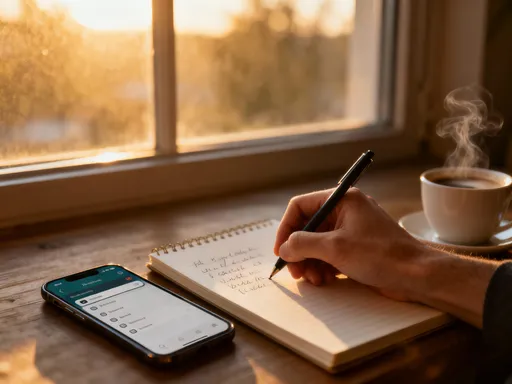
As the weeks went by, something shifted. I stopped dreading the cold mornings. I started looking forward to them. There was a quiet joy in standing by the window, tea in hand, speaking my day into existence. “Morning team, here’s my update. Project Alpha is on track. Need to follow up with design by noon. Also, remind me to book the vet for Max.” I’d hit stop, smile, and move on.
My workflow didn’t slow down in winter. It transformed. I was more present. More creative. More in control. I even started using voice notes to help my kids. Instead of writing out spelling words, I’d record them saying each one. They loved listening and repeating. I used it to plan meals, track appointments, and even draft blog posts. The cold didn’t disappear. But it no longer ruled my day.
This wasn’t about productivity for productivity’s sake. It was about ease. It was about honoring my energy, my body, and my time. I wasn’t fighting the season. I was flowing with it. And in that flow, I found more joy, more clarity, and more space to breathe. Voice-to-text didn’t just save me time. It gave me back a sense of calm I didn’t know I’d lost.
Why This Matters Beyond the Cold
The lesson I learned wasn’t just about winter. It was about listening—to my body, to my life, to the moments that matter. It was about choosing kindness over pressure. Effortlessness over effort. And it’s a lesson that’s stayed with me long after the snow melted.
Now, in every season, I ask myself: What’s the easiest way forward? Not the fastest. Not the most impressive. But the easiest. Because ease isn’t laziness. It’s wisdom. It’s knowing when to type, when to speak, when to rest. It’s about working with your life, not against it.
And that mindset has changed more than my workflow. It’s changed how I show up—as a worker, a mother, a friend, a woman building a life that feels good. I’m less stressed. More present. More connected to what matters. And I owe a lot of that to a simple feature I used to ignore.
So if you’re sitting there, fingers cold, coffee cooling, wondering how to start your day—try this. Just speak. Say one thing out loud. Let the tech catch it. See how it feels. You might be surprised at how much lighter your day becomes. Because sometimes, the most powerful tool we have isn’t in our hands. It’s in our voice.